Verkstaden
Där varje bete tillverkas.
I vår Stockholm-verkstad gjuts, finslipas och packas Stubnose — och Project Hardbait tar form från trä till form.
Bakom gjutningen
German plastic, measured by hand
Every batch starts with soft yet durable German plastisol, heated and hand-measured so the action stays consistent from the first pour to the last.
Poured in small batches
We pour in small batches in our Stockholm workshop. Small batches mean tighter colour control — and why finishes sell through fast.
Hand-finished colours
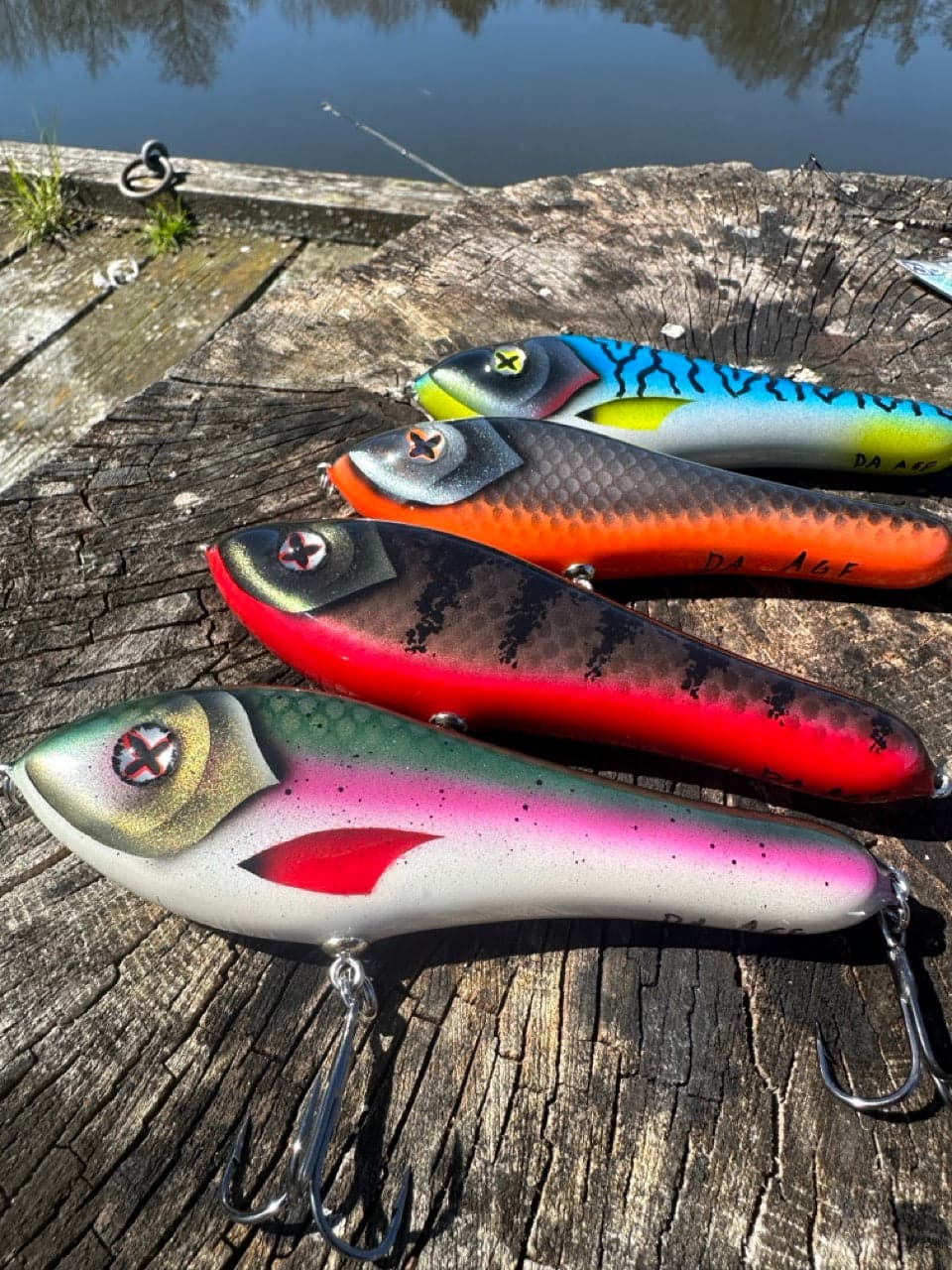
Glimmering Perch, Ruby Bonanza and the rest are layered by hand. Because each is finished individually, no two are ever quite identical.
Swim-tested before it ships
Profiles are tested on the water in the conditions they're built for. If the paddle doesn't kick on a slow roll, it doesn't leave the bench.
Project Hardbait
The build log.
Get early access when the first hardbait goes live.
- Tooling
First production mould cut
The approved profile moved to tooling this week. We cut the first aluminium mould and pulled a handful of test bodies — the belly weight is sitting exactly where we wanted it.

- Testing
Prototype #4 on the water
Reel-jerked prototype #4 through a cold front. Slow-sink rate is dialled with 2/0 hooks; the glide is wide without washing out at speed. A couple of follows from good pike — promising.
- Prototype
Carving the wooden master
Back to the bench. We hand-shaped a wooden master, weighted it and swim-tested in the tank until the action was right. This is the shape everything else is built from.

- Concept
Why a hardbait, and why in the open
We decided to develop our first hardbait out in the open — sharing the process from wooden prototype to production line, and bringing customers in early to shape profile, colour and action.